


Puffer Jacket
Why Every Traveler Is Buying This Lightweight Packable Puffer Jacket Before Summer Ends
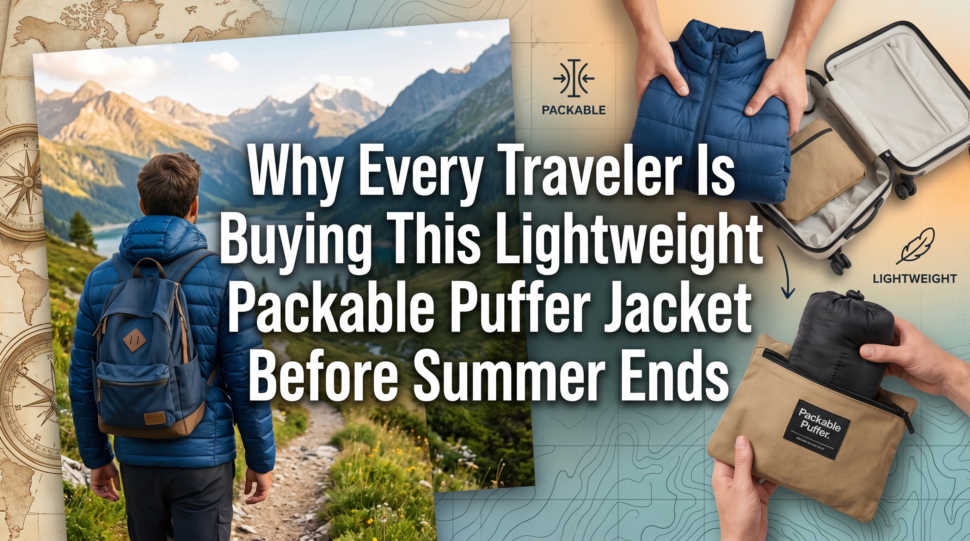
When you think of summer, you think of the sun, the beach, breezy linen shirts, and light sandals. But experienced travellers understand that crossing the ocean means freezing aeroplanes, high altitude mountain microclimates, and an unpredictable drop in temperature every evening.
When it comes to comfort and without cumbersome bags, a top-of-the-line packable lightweight puffer is the essential no-brainer. Indeed, intelligent adventurers are purchasing their equipment early. This article will tell you the reasons why a top-quality travel puff jacket from Jackets Junction ought to be packed in your suitcase, what to look for in terms of tech specs,s and why this easy piece of space-saving traveling gear will alter your packing.
Why Do Travelers Buy Puffer Jackets in the Summer?
As the heat of summer continues, it may seem strange to be shopping for insulated outerwear, but there are several good reasons why travelers are in a hurry to get it before the end of summer.
Surviving the AC Freeze
Commercial HVAC systems always have a cold temperature, whether on a transatlantic flight or in a transit terminal waiting area. If you’re wondering what the lightest jacket for an airplane is, the answer is an ultra-lightweight puffer jacket. It is your own soft blanket to snuggle up under while you are high in the air at 35,000 feet, and to fit in the size of a water bottle when you get back to the ground.
Getting ready for Microclimates and High Altitudes
There’s no summer like the summer in the city. When touring the Pacific Northwest, the tallest mountains in Europe, and evening cruises, it can quickly drop much colder after sunset. The ultra-light outerwear layer allows you not to be caught by surprise by a sudden cold in the region.
Navigating Summer to Fall Transition Outfits
Purchasing early will enable you to easily make up for the seasons. A packable puffer is great to use as a standalone top layer over a t-shirt in late August evenings, and then it becomes a great insulating mid-layer under a heavier coat once autumn comes.
Insulation Breakdown: Maximum Warmth, Minimum Space
One of the key things to take into account when looking for the best jacket to travel with is a balance between weight and warmth. You want the warmest jacket that can fit into a suitcase without bulking it up too much while you’re on the plane.
Lightweight Down Jacket vs. Synthetic Options
If you’re looking to compress as much as possible, no other jacket will give you the same performance as a lightweight down jacket. Down clusters loft up to insulate an amazing amount of body heat, but they collapse into a remarkably small size. Higher fill power ratings (650+) will provide the optimal warmth-to-weight.
Synthetic Insulation: Today’s synthetic down is designed to be moisture resistant, the one big drawback to down, and retain its loft. In wet climates, a synthetic water-resistant packable jacket will keep insulating even if you get caught in a sudden summer downpour.
Smart Packing: How to Pack Light for Cold Destinations
The question is: Do I need a puffer jacket for summer travel? Yes, if you don’t want to use the room in your checked bags. An important thing to remember is that to master a minimal packing list, versatile and highly compressible layers are key.
A convenient packable jacket that is designed to fit into a single suitcase will take care of three heavy hoodies or thick sweaters that would otherwise take up half of your suitcase. It can be paired with a lightweight moisture-wicking base layer for chilly days or a rain shell for instant protection in the event of rain. This will allow you to save up lots of room for your summer essentials while reducing the physical space that your warm layers take up.
Frequently Asked Questions (FAQs)
Q1. What makes a puffer jacket really “packable”?
A1. The key to a really packable jacket is the face fabric of the jacket itself, which is made from ultra-fine, tightly woven nylon or polyester fabric, and the highly compressible insulation. It will have a separate stuff sack or an extra pocket that zips up into a pocket in the inside of the jacket so that the entire jacket can be folded into itself.
Q2. Can a lightweight puffer handle sub-zero temperatures?
A2. The temperature rating for an ultra-lightweight packable puffer is cool to chilly (around 40°F to 60°F) when used alone. But, due to its lightweight silhouette, it’s an ideal mid-layer. It can be used to cross a lot more extreme microclimates if you put it under a windproof shell or a heavy-duty parka when you can.
Q3. Is it better to get a hooded or non-hooded travel puffer?
A3. If your primary goal is just to get from point A to B, a non-hooded puffer may be more versatile to stack under other jackets without bulk around the neck. But for prolonged outdoor activity or city strolling, a low-profile insulated hood is a great option that won’t break the bank on weight.
Enclose Your Last and Best Travel Buddy
Don’t let the first frost of fall be the catalyst for discovering your travel wardrobe is lacking its most versatile tool! When it comes to lightweight outerwear, the last thing you want is to be caught off guard by the weather, which is why it’s important to invest in clothing and protect yourself before the season begins.
Looking for a more streamlined approach to luggage and travel like a pro? Explore the select range of top-quality travel jackets at Jackets Junction today. Whether you’re seeking the best travel jacket 2026 options or prefer something that can handle all weather conditions and is easy to pack, we’ve got you covered.