


leather jackets
How to Identify Real Leather in Men’s Jackets: 7 Easy Ways
Key Takeaways
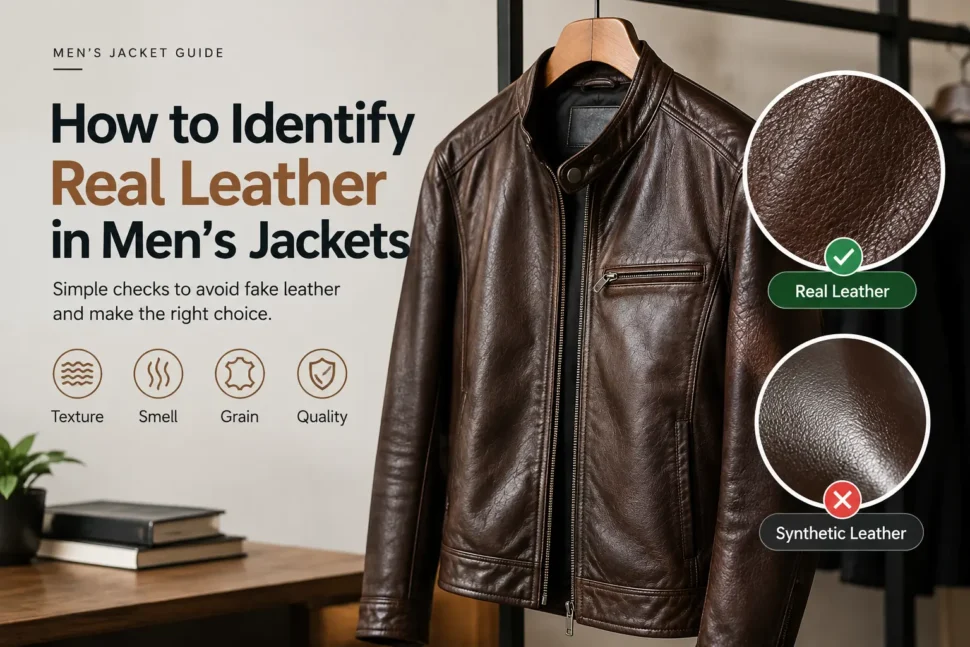
- Check the label or tag first — it should state “genuine leather,” “full-grain,” or “top-grain,” not “PU” or “faux leather.”
- Feel the texture, since real leather has a slightly warm, uneven, almost skin-like feel that synthetics rarely copy.
- Look closely at the grain, as authentic hide shows natural pores and small imperfections rather than a repeating printed pattern.
- Smell the jacket, because real leather has an earthy, slightly musky scent, while synthetics often smell like plastic or chemicals.
- Examine the cut edges, which look rough and fibrous on real leather and smooth or plastic-like on synthetic material.
- Try a small water-drop test, since genuine leather absorbs a drop slowly while most synthetics let it bead up on the surface.
- Weigh the price and weight together — real leather is heavier and rarely sold cheaply, so an unusually low price is a red flag.
Introduction
Real leather is one of the most valued materials for mens leather jackets, prized for its durability, natural texture, and the way it ages and softens over years of wear. But with synthetic alternatives like PU (polyurethane) and PVC leather becoming harder to tell apart from the real thing at a glance, it’s easy to end up paying leather prices for a jacket that isn’t leather at all.
If you’re planning to buy a genuine leather jacket, it’s important to know how to distinguish real leather from synthetic alternatives. A few simple checks, including examining the texture, smell, grain, and overall quality, can help you make a more informed choice. In this blog, you’ll learn how to identify real leather in men’s jackets and avoid paying genuine-leather prices for a synthetic jacket.



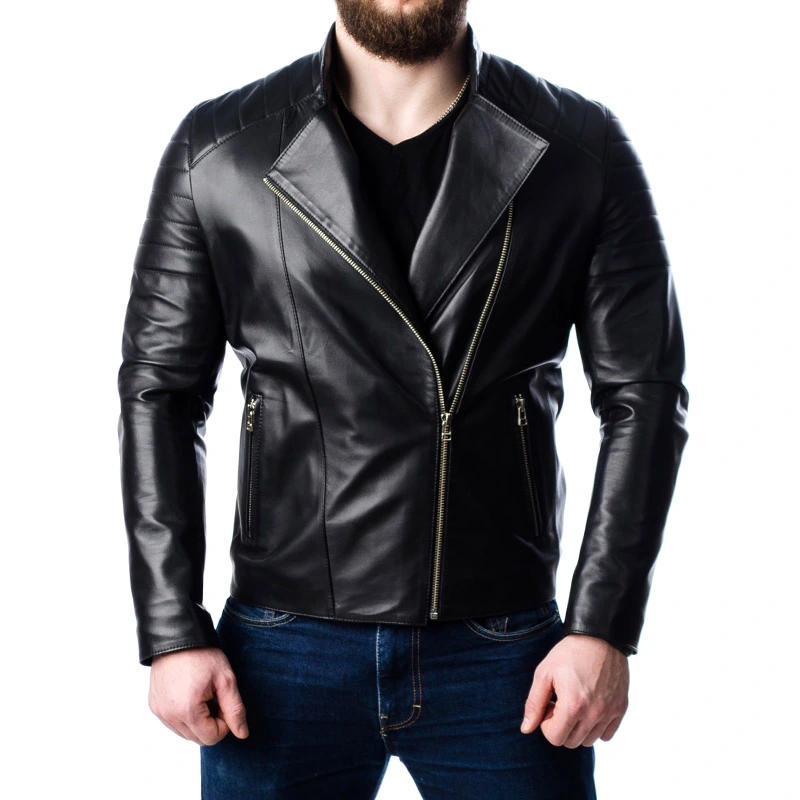
7 Easy Ways to Identify Real Leather in Men’s Jackets
Here are the seven checks you can run before deciding whether a jacket is genuine leather.
1. Check the Label or Tag
The fastest way to identify real leather is to read the care label sewn inside the jacket, usually near the collar or an inner pocket. Genuine leather is typically labeled “genuine leather,” “full-grain leather,” or “top-grain leather.” If the tag says “PU leather,” “faux leather,” “vegan leather,” or “synthetic material,” it isn’t real.
Labels aren’t foolproof on very cheap or unbranded jackets, so treat this as your starting point and confirm it with the texture and grain checks below.
2. Touch and Feel the Texture
Run your hand across the surface. Real leather feels slightly warm to the touch, a little uneven, and softens the more you handle it. PU and PVC leather tend to feel cool, uniformly smooth, and slightly plasticky or rubbery, almost like a stiff sheet rather than a natural material.
Press the surface gently with your fingertip — real leather often shows faint wrinkles or creases that fade slowly, while synthetic material tends to bounce back instantly and stay perfectly flat.
3. Examine the Grain and Pores
Genuine leather comes from animal hide, so it naturally shows small pores, faint scars, or slight irregularities in the grain — no two sections look exactly alike. Synthetic leather is manufactured, so its grain pattern usually repeats in a regular, almost printed way once you look closely across a larger area.
A magnifying glass isn’t necessary — just compare two different spots on the jacket. If the texture looks identical in both, it’s likely synthetic.
4. Smell the Leather
Real leather has a distinct, earthy, slightly musky smell that comes from the tanning process and doesn’t fade quickly, even in new jackets. Synthetic leather usually smells like plastic, vinyl, or a chemical odor, especially when the jacket is brand new.
This test works best indoors, away from strong perfumes or store fragrances that can mask the jacket’s natural scent.
5. Check the Edges of the Leather
Look closely at any raw, unfinished edge of the jacket — around an inner seam or lining, for example. Genuine leather has a rough, fibrous, slightly irregular edge because it’s cut from natural hide. Synthetic leather has a smooth, clean-cut edge, often with a visible fabric or foam backing underneath since it’s built up in layers.
6. Do a Water Drop Test
On a small, inconspicuous spot, place a single drop of water and watch what happens. Real leather is porous, so it absorbs the drop slowly over a minute or two and may darken slightly at that spot. Synthetic leather is non-porous, so the water tends to bead up and sit on the surface instead of soaking in.
Use only a small drop and blot it dry afterward — this test is meant to be quick and shouldn’t be done on a jacket you don’t own yet.
7. Consider the Price and Weight
Genuine leather is a natural material that takes time to tan and finish, so it’s rarely cheap, and a full jacket made from it has noticeable heft. If a jacket marketed as “leather” is priced far below what real leather jackets typically cost, or feels unusually light, that’s a strong sign it’s synthetic.
A burn test can technically distinguish leather from plastic, but it should never be tried on a jacket you’re wearing or don’t already own — it’s better left to a professional, and for everyday shopping, the checks above are enough.
Choose Genuine Leather Jackets from Jacket Junction
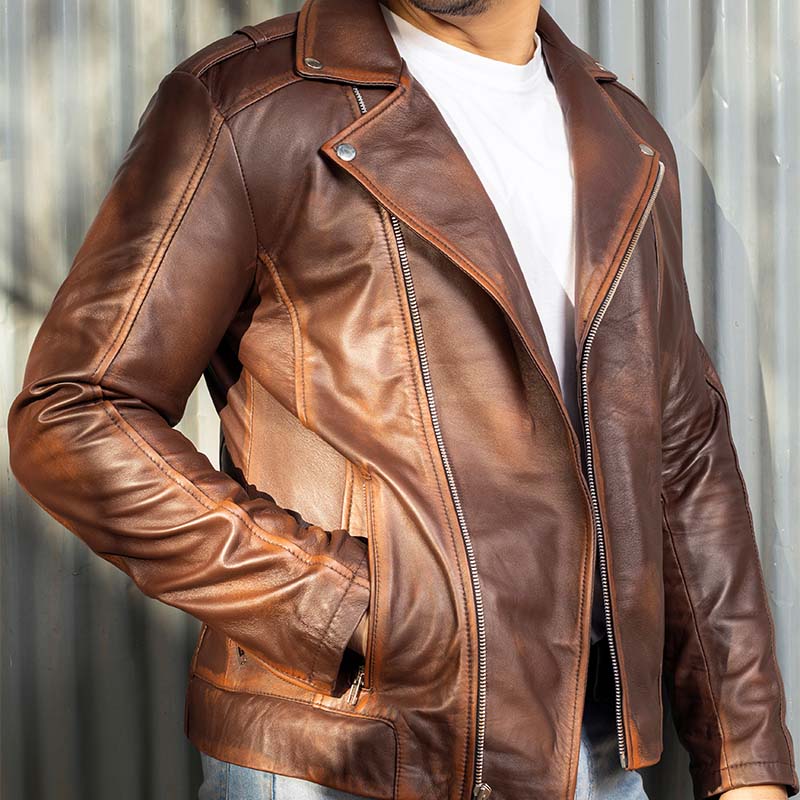
At Jacket Junction, we believe a leather jacket should be an investment piece — something that’s genuinely leather, built to last, and gets better with age. Every jacket we make uses carefully selected, high-quality genuine leather sourced from trusted tanneries, so you never have to second-guess what you’re wearing.
Looking for the perfect leather jacket mens can rely on every day? Whether you’re dressing for the office, a night out, or cooler months ahead, our men’s leather jackets are built for real everyday wear — not just for looking good on a hanger.


Conclusion
Knowing how to identify real leather protects you from overpaying for a synthetic jacket dressed up to look like the real thing. Start with the label, then confirm it with touch, grain, and smell — these three checks alone catch most fakes.
For anything borderline, the edge check and water-drop test give you extra confidence, and the price and weight of the jacket are usually the final giveaway. Whichever jacket you choose, pick one that fits your budget, climate, and how often you’ll actually wear it.
FAQs
Q1. How Can You Tell if a Jacket Is Real Leather Just by Looking at It?
Ans: Check the label for “genuine,” “full-grain,” or “top-grain” leather, then look at the grain up close real leather shows natural pores and small imperfections rather than a repeating pattern.
Q2. Does Real Leather Have a Smell?
Ans: Yes. Real leather has an earthy, slightly musky smell from the tanning process. Synthetic leather usually smells like plastic or a chemical odor, especially when new.
Q3. Is PU Leather the Same as Real Leather?
Ans: No. PU (polyurethane) leather is a synthetic material made to look like leather. It’s lighter, cheaper, and doesn’t age or develop a patina the way genuine leather does.
Q4. Does Real Leather Absorb Water?
Ans: Real leather is porous and slowly absorbs a small water drop, sometimes darkening slightly at that spot. Synthetic leather is non-porous, so water tends to bead up on the surface instead.
Q5. Is Real Leather Worth the Higher Price?
Ans: For most people, yes — genuine leather jackets last for years, soften and mold to the body over time, and can often be repaired, while synthetic leather tends to crack or peel after a couple of seasons.